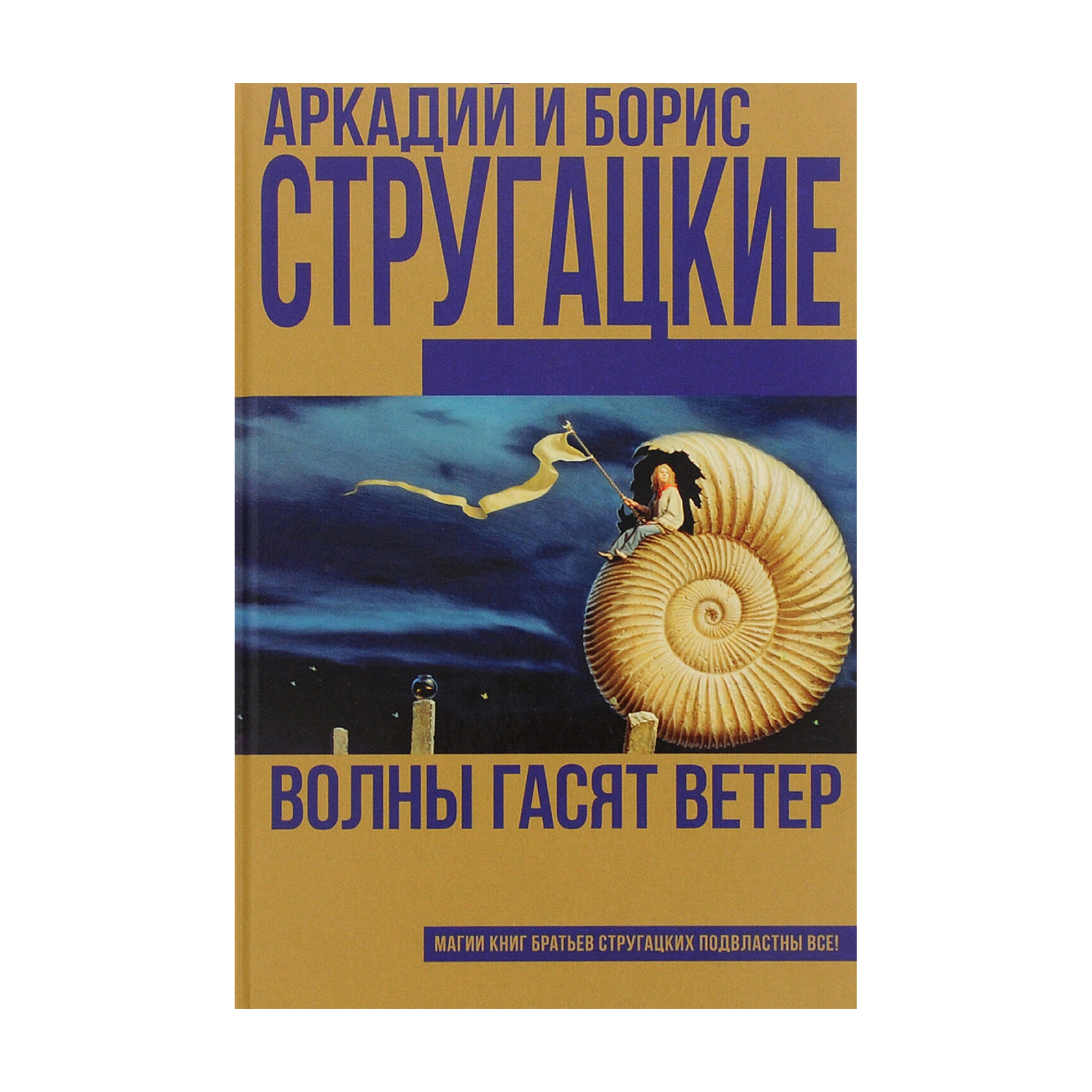
Plot
The novella is written in the form of a diary-memoir by 89-year-old Maxim Kammerer, head of the Ural-North sector of KOMKON-2. Maxim Kammerer recalls moments in his life connected with Toivo Glumov (Maya Glumova's son) and their shared work from early 1995 to May 1999. Part of the story's plot is presented in the form of documents: agent reports, personal letters, instructions, etc. Kammerer decided to write his memoirs after receiving a letter from Maya Glumova and the publication of a book by a certain P. Soroka and E. Brown, in which Toivo's story is presented tendentiously and inaccurately.
In the early 1990s, Kammerer works at KOMKON-2 as the head of one of the departments of emergency situations—Emergency Incidents. These departments are responsible for investigating any strange, unusual, or unexplained phenomena and incidents, based on the principle: "Anything we don't understand can pose a threat to humanity." After the emergency on the planet Tissa in 1993, Kammerer reopens the long-forgotten problem of "alien" progressivism in the sphere of human interests. Maxim receives approval from his immediate superior, Athos-Sidorov, and is given the opportunity to assemble a team to develop a project codenamed "Visit of the Old Lady"—an investigation aimed at uncovering possible progressor activity by an unknown supercivilization (presumably the Wanderers) on Earth and the Periphery.
After the death of Lev Abalkin ("Bug in the Anthill"), the term "Sikorski syndrome" emerged—"a complex of uncontrollable fear of Wanderers' interference in the lives of humanity on Earth." These events "strangely cleared the Wanderers of suspicion," and among specialists, it became almost indecent to seriously discuss the possibility of progressor activity by other civilizations on Earth. Therefore, Kammerer fails when he approaches a number of leading figures with the question: "If progressors from significantly more advanced extraterrestrial races are operating on Earth, then what will their actions most likely consist of?" The only person to take the question seriously was Isaac Bromberg, who proposed a model known as the "Bromberg Memorandum": "Humanity will be divided into two unequal parts by some unknown parameter, the smaller part will forcibly and permanently overtake the larger, and this will be accomplished by the will and art of a super-civilization utterly alien to humanity." This model forms the basis of the investigation, and according to it, information is collected and analyzed on all unexplained emergencies that can be interpreted as the application of a "selective" influence to a group of people, producing significantly different results for different people ("response dispersion"). It was also decided to try to find statistical correlations between these episodes and the reactions of specific people.
One of the employees who began working on this topic was Toivo Glumov, a former progressor who consciously left his previous job and came to the emergency department of COMCON-2 to become a "progressor hunter".
The book describes the cases that Toivo Glumov worked on:
- "Fukamiphobia" - an epidemic of refusals from fukamization (or so-called bioblockade) (see below), which took place in the recent past.
- "Penguin syndrome" - a disease expressed in strange dreams in which a person sees himself flying in space, without any protective equipment. This phobia affected people after flying through specific regions of space (subspace tunnels), and does not happen to everyone; Most people find these dreams frightening, while others find them pleasant.
- In the summer cottage village of Malaya Pesha, strange creatures appear, which some people are terrified of, while others feel pity for these creatures or even find them cute. Different people clearly react to the stimulus differently.
- The theme of "Rip Van Winkle" is the unexplained disappearances of people, some of whom later return just as inexplicably.
When Inspector Sandro Mdbevari tries to contact some of the people involved in these cases, strange things happen: while heading to the house of one of them, the Komkonovite loses consciousness, and later cannot even say with certainty whether he reached the house he was looking for or not; The second incident occurred at the home of one of the victims, when, after uttering the phrase, "No, this isn't funny," he inexplicably disappears from the house during a visit from an employee.
Further investigation of the incident leads Maxim and Toivo to the research center where all these incidents are registered and studied. The center itself ("Institute of Eccentrics") raises many questions for Maxim Kammerer, and he sends Toivo and the rest of his department's employees there under various pretexts.
Comparing the lists of participants in the incidents, Toivo notices that some names appear on two or even three lists. After this, he is almost certain of the presence of Wanderers' agents on Earth, and is even ready to present a list of names.
As a result, Logovenko (director of the Institute of Eccentrics) tells everything to the employees of COMCON-2, as well as to members of the world government: Gorbovsky and Komov. Specifically, the discussion centered on the activities of Ludens—a new species of human possessing superpowers and a highly developed intellect. The center's scientists discovered a "third impulse" system in the human brain, absent in most people and dormant in the few who possess it. Activation of this "third impulse" system transforms a person into a "wanderer." Apparently, the first Ludens quickly realized they would be unable to live in human society, as the vast difference in their levels prevented them from perceiving normal people as equal partners (Ludens' perception of ordinary people can be compared to an adult's relationship with a small child). Therefore, after transformation, most Ludens quickly lose their former attachments. As it later turns out, most Ludens are off-world, busy with their own affairs, while only the "midwives" who initiate new Ludens remain on Earth, along with those few who, despite their transformation, have not lost their emotional connection with their loved ones. Trying to create their own society, the Ludens began a secret selection process for people with the "third impulse," using both indirect methods (analyzing reactions to unusual situations and influences, which attracted the attention of COMCON-2) and a test conducted on all visitors to the research center—the so-called "Institute of Eccentrics."
Maxim, who had obviously noticed the "Institute of Eccentrics" even earlier, manages to plant a man there, who gains access to the research results on the presence of the "third impulse." Under various pretexts, Maxim sends all his subordinates there to put them through the institute's scanner and ensure that there are no disguised "wanderers" among them. After visiting Toivo's institute, information arrives: he has the very same "T-wave" on his mentogram, indicating the presence of a "third impulse." Clearly, Toivo will soon receive an offer to activate the "third impulse." Toivo is terrified by this prospect and even plans to leave Earth. Maxim, however, is interested in the opposite: he wants Toivo to accept the offer, but to become an agent for ordinary people among the Ludens. Ultimately, the director of the Institute of Eccentrics, Luden Logovenko, manages to persuade Toivo to join the Ludens. Maxim's hopes for Toivo's sense of duty are dashed; the former employee loses interest in his former life and the people he associated with, and ceases to make any contact. At first, he still visits his mother and his formerly beloved wife, Asya, from time to time, but less and less frequently, until one day he disappears completely. Kammerer is never able to speak with him.
The final document contains a desperate letter from Maya Toyvovna Glumova, in which she despairingly reports that Toyvo has left Earth forever and wonders why Kammerer is saying nothing about it.
After the Ludens' activities are declassified, negotiations between members of the Earth government and Logovenko are held. The disclosure of the facts is called the "Big Revelation" and becomes a notable milestone in Earth history. The Ludens eventually leave Earth. Apparently, they never manage to create their own society.
Fukamization
A fantastical medical procedure performed on a fetus immediately before birth in order to increase the future child's vitality. It consists of two stages:
- introduction of UNBLAF serum ("Bacteria of Life" - actually a bioblockade) into the amniotic fluid
- "disinhibition of the hypothalamus" of the fetus using microwave irradiation.
This procedure greatly enhances the adaptive mechanisms of the immune system, increases the body's resistance to organic and inorganic poisons, radiation, etc. The degree of safety and the development of the procedure were such that there was a "Law on Mandatory Bioblockade", according to which fukamization was performed on all newborns without exception (except for those extremely rare cases when fukamization was contraindicated due to the peculiarities of the brain). The Ludens provoked an epidemic of mothers refusing to have their children fukamized and fought for the repeal of the "Law on Mandatory Bioblockade," since at that time they were unable to restore the brain structure of potential Ludens after disinhibiting the hypothalamus.
The "Fukamization Instructions" were written at the request of A.N. Strugatsky by his attending physician, Yuri Iosifovich Chernyakov.
In the world of Noon, the procedure is named after its creators, sisters Natalia and Hoshiko Fukami. The Strugatsky brothers thus paid tribute to the translator of their works into Japanese, who also bore the surname Fukami.
Setting
The story describes events that took place in the village of Malaya Pesha, located 40 kilometers from Nizhnyaya Pesha, on the Pesha River, which flows into the Cheshskaya Bay of the Barents Sea. In the story, Nizhnyaya Pesha is a scientific settlement, home to a branch of the Sydney Fleming Institute for the Design of Artificial Organisms. 40 kilometers up the Pyosha River from Nizhnyaya Pyosha is the village of Verkhnyaya Pyosha.
Links to other works by the Strugatsky brothers
The events described in the novel "The Waves Extinguish the Wind" directly echo the final chapter of the Strugatsky brothers' novel (collection of stories) "Noon, 22nd Century" - "What You Will Be." This story describes the emergence of a superman and the protagonists' assumptions about the future progress of humanity.
The story mentions the Sorcerer, a character from the novel "Inhabited Island." The sorcerer flew in from Saraksh, visited the "Institute of Eccentrics," and left almost immediately, not wanting to communicate with the Ludens.
The story mentions Arkanar ("while he, shaking his codpiece and waving his sword, tramples the cobblestones of Arkanar's squares")—the setting of the story "Hard to Be a God." The Duke of Irukansky is also mentioned.
The story mentions Camille, a character from the story "Distant Rainbow." It speaks of Camille's "self-destruction" and his long-standing acquaintance with Gorbovsky.