Psychological drama
Detective
Thriller
Family
Fathers and Sons
Social Networks
Death Groups
Netstalking
Loneliness
The third novel in the detective book series about Zamyatin and Pogodin.
SYNOPSIS
The plot of the novel "Quiet House" is based on the death of fifteen-year-old Liza Lapteva. She fell from the balcony of the 13th floor, in her hand she had a note with two words "Quiet House". By all indications, this is suicide, especially since cuts of varying ages are found on the girl's wrists. However, Liza's mother refuses to believe this version. Through persistence and tears, she forces an unofficial investigation. Ivan Zamyatin, a Moscow Criminal Investigation Department investigator, reluctantly agrees to help her. He tells his friend Miroslav Pogodin, a PhD candidate with whom he investigated the murders in the novel "The Rose and the Cross," about the girl's death and the strange note.
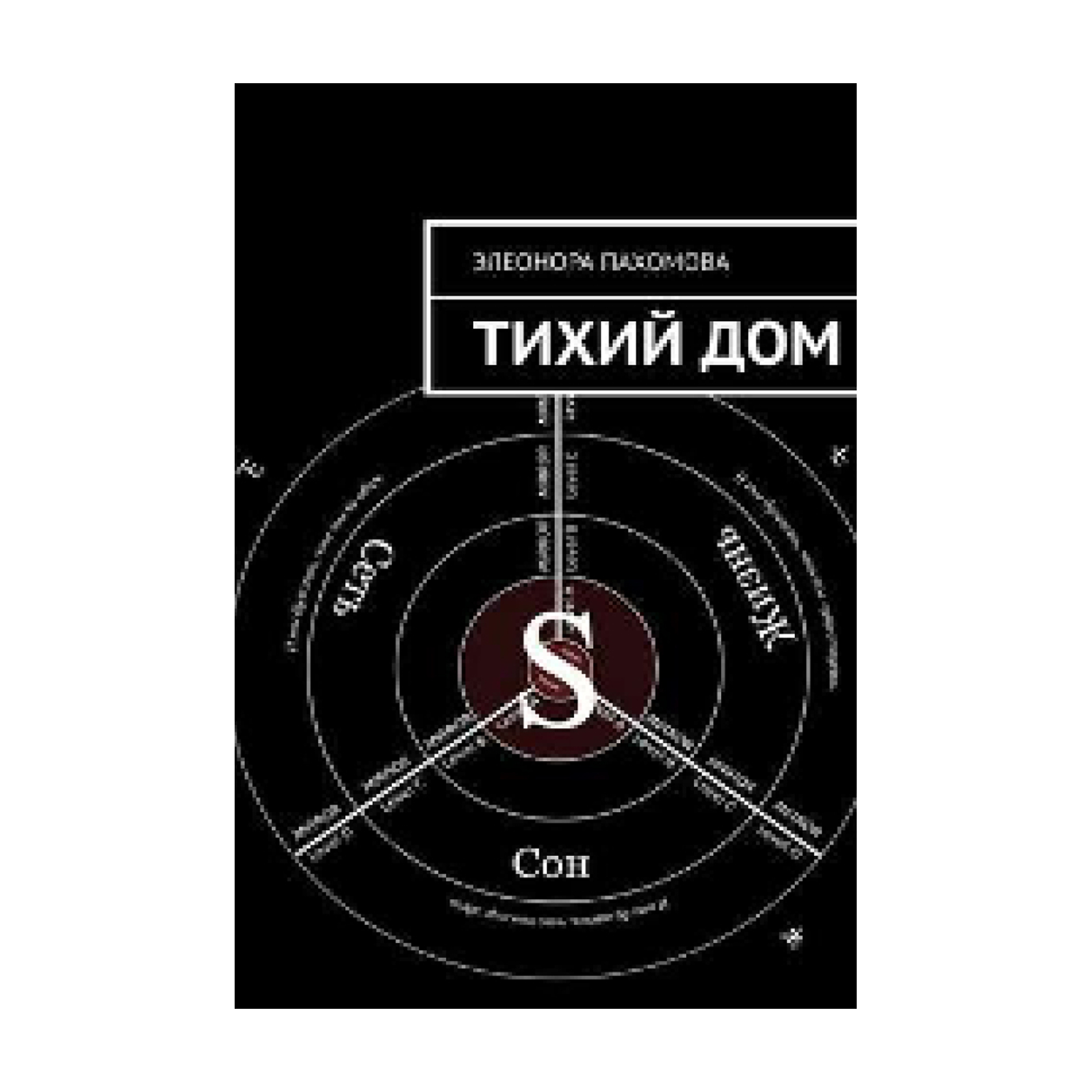
Pogodin informs him that "Quiet House" is not just an abstract phrase; he has encountered it before. Pogodin also saw fresh cuts on the wrists of one of his students, and the student then told him the theory about "Quiet House." "There is a legend about the depth and accessibility of websites. The deeper, the more interesting and dangerous. The very bottom, the very end, and the very peak—Quiet House—are the point of no return to the real world. Quiet House is not a website. It is the state of a person who has undergone an informational rebirth. You can get to Quiet House through sleep, life, and the Internet," the legend goes. (#тиийдом is also one of the hashtags for death groups on VK).
Three parallel plot lines develop in the novel "Quiet House":
As the narrative progresses, the three plot lines become very closely intertwined, increasing the intrigue.
In the end, Zamyatin, Pogodin and Ray Madsen come to the conclusion of their investigations. Thus, Zamyatin discovers that the death groups were invented by his colleagues from Department "K" to create a precedent for restricting freedom of speech on the Internet, citing its danger to the fragile psyche of adolescents. After all, the Internet is the opposition's main weapon in the fight against the official authorities; it disseminates information that is not allowed on TV and in the press, it organizes rallies, and so on. At the same time, when staging the death groups, the authorities did not calculate that the fictitious "death groups" would acquire rabid imitators who would actually begin driving teenagers to suicide. (Zamyatin will detain one of them).
Pogodin will find the man who invented the religion of modern teenagers – netstalking and the virtual paradise – the Quiet House. He turns out to be a once-talented student of a professor who teaches memetics as an optional course in Russia. Memetics believes that any religion is just a meme complex. This student, using memetics, created the "Quiet House" meme complex, which has become a new religion for modern teenagers. Pogodin meets him and sees an ordinary, average system administrator. No one knows that he has invented a new religion and that he works in a medium-sized company, like an ordinary, nondescript quiet guy.
Ray Madsen will find "Quiet House" - that will be the title of the last entry on Lisa's laptop. In it, Lisa will say that what hurts her most is how unhappy her parents are...
When informing Lisa's mother of the investigation results, Zamyatin will spare her. He will not say that Lisa committed suicide because of what was happening in their family. He will say that she was a victim of death groups.
FRAGMENTS
"– How should we live now, Azim?" – She finally looked up at him. “Wherever you go, you take yourself with you. Even there,” he pointed at the ceiling. “No matter what world you continue to exist in, there will never be anything more permanent than you. So learn to get along with yourself. Until you do, there’s no need to rush to your daughter.”
“By the way, there’s another amusing legend about deadly files,” he said when the waiter had left. “If you download a number of deadly files, including Sueside Mouse, and sort them into a folder on your computer, they will transform into a computer program that will launch spontaneously, and the computer’s owner will meet a terrible end.” “Are these the mysterious discoveries of netstalkers?” Pogodin asked, making notes in his diary. “Of course not. Although Sueside Mouse is indeed a curious thing. But we’re not interested in what’s on the surface; we’re striving to penetrate the depths of the network.”
“I find another video more curious – ‘Suicide Mouse,’” Ray said, looking past Pogodin at the window behind him. “The main character is Mickey Mouse, hence the title. According to legend, the video was discovered in the Disney Studio archives when they decided to release Mickey’s adventures, which Walt Disney himself drew in the 1930s, on DVD.”
“According to legend, the Quiet House is the lowest point of the network, a hidden bottom. To reach it, you need to go through all the levels of the network, learn all its secrets, and it will appear as the apogee of virtuality. But the Quiet House is also a point of no return; at best, a transition to a new level of consciousness, and at worst… no one knows. Anyone who seriously seeks it must be prepared for the fact that their earthly life may end. How exactly this happens is unknown.”
Esoteric Detective. Publishing Solutions, 2019
Detective
Thriller
Family
Fathers and Sons
Social Networks
Death Groups
Netstalking
Loneliness
The third novel in the detective book series about Zamyatin and Pogodin.
SYNOPSIS
The plot of the novel "Quiet House" is based on the death of fifteen-year-old Liza Lapteva. She fell from the balcony of the 13th floor, in her hand she had a note with two words "Quiet House". By all indications, this is suicide, especially since cuts of varying ages are found on the girl's wrists. However, Liza's mother refuses to believe this version. Through persistence and tears, she forces an unofficial investigation. Ivan Zamyatin, a Moscow Criminal Investigation Department investigator, reluctantly agrees to help her. He tells his friend Miroslav Pogodin, a PhD candidate with whom he investigated the murders in the novel "The Rose and the Cross," about the girl's death and the strange note.
Pogodin informs him that "Quiet House" is not just an abstract phrase; he has encountered it before. Pogodin also saw fresh cuts on the wrists of one of his students, and the student then told him the theory about "Quiet House." "There is a legend about the depth and accessibility of websites. The deeper, the more interesting and dangerous. The very bottom, the very end, and the very peak—Quiet House—are the point of no return to the real world. Quiet House is not a website. It is the state of a person who has undergone an informational rebirth. You can get to Quiet House through sleep, life, and the Internet," the legend goes. (#тиийдом is also one of the hashtags for death groups on VK).
Three parallel plot lines develop in the novel "Quiet House":
- The line of informal investigation, which reveals the theme of modern teenagers' fascination with the internet and the myths that have arisen around the World Wide Web. In particular, it is about teenagers' fascination with netstalking (studying the Dacnet, deep web, etc.), the theory about the "Quiet House", and death groups. This line, in turn, branches into three tracks that the investigators follow. Zamyatin undertakes to find out who is behind the death groups, Pogodin finds out the origins of the infernal web legend about the Quiet House and who is behind it. A third participant in the investigation, Ray Madsen, is recruited as an expert on netstalking. He is obsessed with finding the Quiet House, a virtual Shambhala. Ray's task is to comb through the dead girl's laptop and online traces to determine whether her death is directly related to the online search for the Quiet House. Ray finds entries in Lisa's laptop, each of which is classified, just like the most valuable "finds" of netstalkers. Ray gradually deciphers the entries, which turn out to be the girl's personal diaries.
- The book's second plot line focuses on the relationships within the deceased Lisa's family. Her parents' unhappy marriage, the environment in which she was raised, and the subtle psychological abuse she inflicted on her child, which the adult family members overlook. The main character in this storyline is Lisa's mother. The focus is on her delusions, thoughts, and feelings during her youth, while raising her daughter, and after her death. And most importantly, her experiences due to the death of her daughter and the need to get to the bottom of the truth: did Lisa commit suicide and is she guilty. This is the main thing the mother expects from the investigation. If it turns out that this is the case, then she herself will no longer be able to live.
- The third line is Lisa's own diaries, in which her thoughts, feelings and experiences are gradually revealed. Ray Madsen deciphers one entry after another as the book progresses, and we are drawn deeper and deeper into the girl's thoughts, experiences and teenage suffering. The last page of the diary was written on the day of Lisa's death and sheds light on the true reasons for her death and answers her mother's main question.
As the narrative progresses, the three plot lines become very closely intertwined, increasing the intrigue.
In the end, Zamyatin, Pogodin and Ray Madsen come to the conclusion of their investigations. Thus, Zamyatin discovers that the death groups were invented by his colleagues from Department "K" to create a precedent for restricting freedom of speech on the Internet, citing its danger to the fragile psyche of adolescents. After all, the Internet is the opposition's main weapon in the fight against the official authorities; it disseminates information that is not allowed on TV and in the press, it organizes rallies, and so on. At the same time, when staging the death groups, the authorities did not calculate that the fictitious "death groups" would acquire rabid imitators who would actually begin driving teenagers to suicide. (Zamyatin will detain one of them).
Pogodin will find the man who invented the religion of modern teenagers – netstalking and the virtual paradise – the Quiet House. He turns out to be a once-talented student of a professor who teaches memetics as an optional course in Russia. Memetics believes that any religion is just a meme complex. This student, using memetics, created the "Quiet House" meme complex, which has become a new religion for modern teenagers. Pogodin meets him and sees an ordinary, average system administrator. No one knows that he has invented a new religion and that he works in a medium-sized company, like an ordinary, nondescript quiet guy.
Ray Madsen will find "Quiet House" - that will be the title of the last entry on Lisa's laptop. In it, Lisa will say that what hurts her most is how unhappy her parents are...
When informing Lisa's mother of the investigation results, Zamyatin will spare her. He will not say that Lisa committed suicide because of what was happening in their family. He will say that she was a victim of death groups.
FRAGMENTS
"– How should we live now, Azim?" – She finally looked up at him. “Wherever you go, you take yourself with you. Even there,” he pointed at the ceiling. “No matter what world you continue to exist in, there will never be anything more permanent than you. So learn to get along with yourself. Until you do, there’s no need to rush to your daughter.”
“By the way, there’s another amusing legend about deadly files,” he said when the waiter had left. “If you download a number of deadly files, including Sueside Mouse, and sort them into a folder on your computer, they will transform into a computer program that will launch spontaneously, and the computer’s owner will meet a terrible end.” “Are these the mysterious discoveries of netstalkers?” Pogodin asked, making notes in his diary. “Of course not. Although Sueside Mouse is indeed a curious thing. But we’re not interested in what’s on the surface; we’re striving to penetrate the depths of the network.”
“I find another video more curious – ‘Suicide Mouse,’” Ray said, looking past Pogodin at the window behind him. “The main character is Mickey Mouse, hence the title. According to legend, the video was discovered in the Disney Studio archives when they decided to release Mickey’s adventures, which Walt Disney himself drew in the 1930s, on DVD.”
“According to legend, the Quiet House is the lowest point of the network, a hidden bottom. To reach it, you need to go through all the levels of the network, learn all its secrets, and it will appear as the apogee of virtuality. But the Quiet House is also a point of no return; at best, a transition to a new level of consciousness, and at worst… no one knows. Anyone who seriously seeks it must be prepared for the fact that their earthly life may end. How exactly this happens is unknown.”
Esoteric Detective. Publishing Solutions, 2019