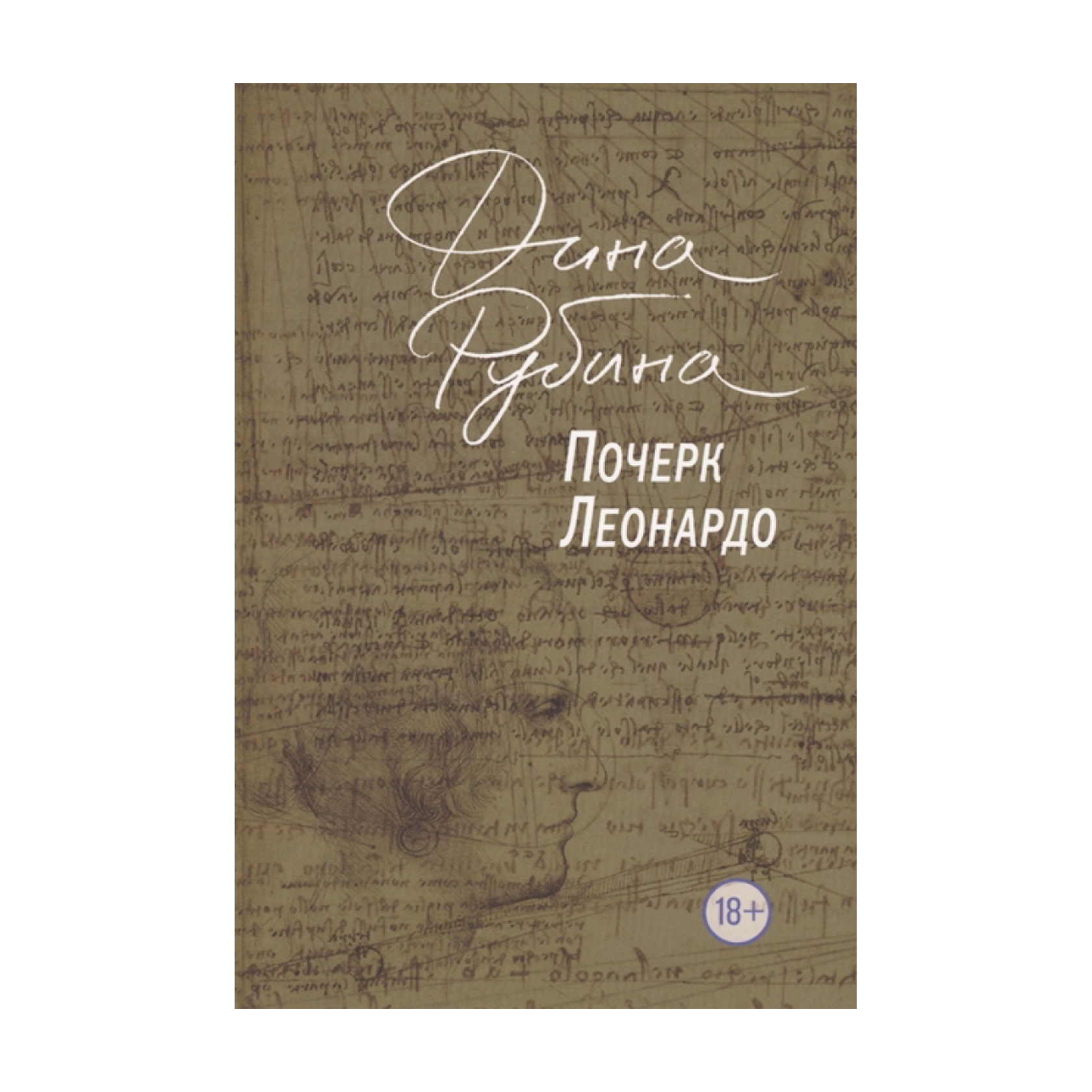
When you grow up in an orphanage, you have a fascination with mirrors, the Da Vinci Code, and inherit the gift of clairvoyance from your grandfather, Wolf Messing. The story of a circus troupe on a journey, the predictions and tragedies the heroine is forced to witness and which destroy her life.
Mystical thriller
Psychological drama
Fantasy detective
Clairvoyance
Predictions
Mirrors
Wolf Messing
Love
Genius
Novel by Dina Rubina "Leonardo's Handwriting" tells the story of a girl named Anna, who has an amazing gift of clairvoyance. She writes in an unusual "mirror" handwriting, similar to that of Leonardo da Vinci, and has a mystical connection with mirrors. Her abilities are linked to her being a descendant of Wolf Messing.
The first parts of the book tell of her life in an orphanage and in a foster family. Anna's (then named Nyuta) foster mother, Mashuta, is surprised by her behavior and strange interest in mirrors. Only Eliezer, an old eccentric who writes in the same handwriting, understands her.
The following parts tell of the main character traveling the world with the circus. However, her gift of foresight brings her only misfortune: she can't change anything and is forced to watch as the tragedies she predicts come true. Moreover, because of her abilities, those around her begin to distrust her and even fear her.
REFERENCES
"The Queen's Gambit" ("The Queen's Gambit"), 2020, dir. S. Frank
MOOD
"Leonardo's Handwriting" is Dina Rubina's first mystical novel. There is mysticism here, and the main conflict revolves around the supernatural abilities of the main character. In the story of a girl-woman with a strange connection with mirrors and the ability to know everything in advance, including people's destinies, Rubina is more interested not in her gift itself, but in how strange and hard it can be for its owner among people, what beautiful and monstrous things can happen by her will. Or fault. Or without one or the other, simply because a person can see what he can, and cannot help but see it.
HEROES
At the center is poor, unhappy Nyuta, who was weighed down by the unwanted weight of her gift, and this burden became heavier with each passing year: the path from a girl ringing with laughter to rough boredom. Endowed with supernatural abilities and yet remaining human, a saint in her humanity.
Around her are Anatoly and Mashuta - wonderful people who accidentally drew a ticket to the looking glass.
Vladimir (the hero - a trickster) is simple, likeable in his "realness".
Eliezer is a big child with a genius brain, kind and obedient.
"old musician Senya" (the hero is an artist) is a subtle, musical person, but what a charm comes from this melancholic man, like his musical instrument, with his hard-won happiness, obtained at the end of his life.
You can't call them all idyllically happy, each one has their own loneliness inside. Rubina has practically no absolutely negative characters, even the most unsympathetic ones have something human (the fat albino is Eliezer's negative)
SYNOPSIS
"... He assured that she was an angel. Funny, of course? Not in the sense that she was like an angel from heaven, but that her nature was related to certain creatures that in the popular consciousness appear as angels, archangels, and all sorts of... and other heavenly brethren. "That people believe in them, because from time to time such creatures really do appear on earth among people..." - says Vladimir about the main character Anna.
The center of the novel is a girl/young woman Anna, the illegitimate daughter of the illegitimate son of the legendary Wolf Messing. She is left-handed, like Leonardo da Vinci. She has a special brain structure (ambidextrous), which makes it more convenient to write from right to left, so that the text can only be read with the help of a mirror - this is called "mirror writing", or "reverse writing" or "Leonardo's handwriting".
From the very beginning of the novel, the author shows who is on the minds of all the characters. The neighbor in the apartment, in whose arms three-year-old Nyuta, a "twice prodigal brat", ended up after the death of her mother. And the adoptive parents, who raise and educate a girl with such rich genes with understanding and caution. The souls of Anna's husband, a simple-minded Ukrainian lad, and her eternally betrothed lover, a master bassoon player, ache. The story is told from the perspective of these characters.
The novel describes the heroine's childhood, youth, and adulthood. The narrative is nonlinear, but this allows us to follow the heroine's life through the eyes of recurring characters, within the novel's tightly wound timeline.
First there was the child. After the death of his mother, the child refused to eat. At all. After incredible efforts, the adoptive parents return the girl Anya to a normal life, but they notice some oddities about her: she is left-handed, predicts events, reads backwards, and writes "in Michelangelo's handwriting" - that is, what she writes can only be read as a reflection in a mirror.
The child can predict the future, plays with mirrors in endless corridors, understands unfamiliar languages, and when she sees a person for the first time, can immediately name their birthdate, phone number, and guess the score of football matches. Although, there is nothing surprising in this, because this is a twice-illegitimate child - the illegitimate daughter of the illegitimate son of the famous psychic Wolf Messing. And her grandfather's abilities were inherited. As a child, she memorized large texts on the fly, but she could not learn to read until they discovered that she was reading and writing in a mirror image. She has a brilliant ability for mathematics and physics, in the future she will be a brilliant circus performer, an incredible stuntwoman, she knows everything there is to know about mirrors. She has the courage that is so necessary for people in dangerous professions, and who cannot be who they are without it.
But this genius, passed down through generations, makes Anna practically incapable of normal, habitual contact with the world. A retrained left-hander (perhaps from Satan, the foolish gossiped), she reads words backwards, memorizes foreign languages and sciences on the fly. She exists in her own upside-down world, writes in mirror-image handwriting, and looks into the mysterious depths of mirrors.
The principle of her life is comparable to a kind of monasticism in the world. Rubina seems to draw a line: genius - saint - angel. Nyuta dismissively rejects the gift. Anna doesn't care about money, clothes, or people. That is, she treats some people well, even very well (those who managed to see her as she is and speak to her as an equal), but with others she simply lives nearby. She clearly doesn't notice most of what happens - she has a special relationship with the world. But sometimes she cries out a prophecy that appears out of nowhere. Thus, at circus school, she predicted the death of a fellow student, and in early childhood, the death of her nanny, Polina, on the operating table. At the same time, she is characterized by contempt for the Higher.
Everything in the novel is focused on unraveling Anna's mystery, her mystical connection with mirrors, which allow her to see the past and present, and foresee the future. Before us is a modern-day Cassandra, with an equally tragic fate. But Dina Rubina, with her characteristic meticulousness, recounted the childhood prophecies of the new Cassandra. She showed how the child gradually discovers her otherness, her omniscience of the future, and gradually realizes that the people she loves and loves do not possess this knowledge, and therefore treat their adopted daughter with hidden fear, mistrust, and even fear her. Rubina is interested not in the gift itself, but in how difficult it is for a gifted person to live in a world of ordinary people.
Dina Rubina is a former musician, her musical talent is reflected in a brilliant word about the role of the bassoon in the orchestra, as well as in an amazing, purely musical find - to begin the novel in complete silence with a single alarming note in which an impending catastrophe is guessed. Here a three-year-old girl climbs onto a stool at night, pulls the mourning shroud from the mirror and freezes, peering into its depths. "She runs and runs her finger over the mirror, as if drawing a person, - recalls a neighbor, who became an unwitting witness of this spectacle, - and strokes, strokes someone."
Anya sees her own there. Her deceased mother, the imminent future, an attractive, wondrous place. But the gift, as a rule, is heavy. «She was increasingly tormented by headaches, and a harassing ringing in her ears. <…> In her youth, she knew how to cut out other people's voices, push away the sound cloud above her head, mentally wipe mirrors… <…> She built a mirror corridor along which she rushed, trying to slip through busy areas… It was easiest on the road - on a motorcycle, in a car, on trains… on planes.».
Anya or Nyuta - as a child, she accidentally enrolls in the "Entertaining Looking-Glass" club, where the classes are taught by the strange, fat Eliezer. And she does not communicate at all with her adoptive mother, who gave her everything and eventually went crazy from neglect and jealousy of Through the Looking-Glass.
The entire narrative unfolds under the magical influence of mirrors. The mirror serves as a metaphor for the transition from the world of the living to the world of the dead. Something Anna least expects to see may appear in it: the collapse of a longe and the death of a gifted aerialist, the terrible death of Helen, Genevieve's beloved. Anna tries to warn the heroes of what fate has in store for them, but no one heeds her warnings. And when the prophesied event comes true, Anna is accused of witchcraft, and Genevieve tries to kill her. Anna flees her gift, immersing herself in the bustle of circus life, in the passions of a stuntwoman, just to avoid hearing the question from her loved ones, just to avoid seeing the answer in the mirror, just to blend in with these people, to become like everyone else.
The images that appear in the mirror become a source of fear and melancholy, and the fragile bridge connecting Anna with people is maintained only by her love for the bassoonist Sen and the teacher of optical illusions Eliezer.
Her entire life is written in the Da Vinci cipher. Anna needs to record every event, re-arrange it for herself, and only then “lay it down” on the shelf of her consciousness in a sequence understandable only to her. She didn’t even immediately recognize herself in the mirror. An ascetic lifestyle and risk, which in one form or another is present at all stages of her growing up, help her cope with the feeling of fear of the One-who-rewarded-her-with-abilities-unusual-for-a-human.
Anna decides to go to meet the Unknown, who has gifted her so richly, in order to trap her fear of the mirror, so as not to become a victim of sudden and unexpected effects. She masters the art of optical games and creates performances of optical illusions.
But you can't escape fate; even Dina Rubina's tragic ending is light and mysterious. "Well, she said to herself. She got on her motorcycle, pulled it out of the parking lot, and, accelerating to maximum speed,... reared it up and, flying over the fence, raced along the mirrored corridor between the black, sparkling lights of the Gulf of St. Lawrence and the black bay of the golden fireworks sky." Suicide or ascension to heaven?
Psychological drama
Fantasy detective
Clairvoyance
Predictions
Mirrors
Wolf Messing
Love
Genius
Novel by Dina Rubina "Leonardo's Handwriting" tells the story of a girl named Anna, who has an amazing gift of clairvoyance. She writes in an unusual "mirror" handwriting, similar to that of Leonardo da Vinci, and has a mystical connection with mirrors. Her abilities are linked to her being a descendant of Wolf Messing.
The first parts of the book tell of her life in an orphanage and in a foster family. Anna's (then named Nyuta) foster mother, Mashuta, is surprised by her behavior and strange interest in mirrors. Only Eliezer, an old eccentric who writes in the same handwriting, understands her.
The following parts tell of the main character traveling the world with the circus. However, her gift of foresight brings her only misfortune: she can't change anything and is forced to watch as the tragedies she predicts come true. Moreover, because of her abilities, those around her begin to distrust her and even fear her.
REFERENCES
"The Queen's Gambit" ("The Queen's Gambit"), 2020, dir. S. Frank
MOOD
"Leonardo's Handwriting" is Dina Rubina's first mystical novel. There is mysticism here, and the main conflict revolves around the supernatural abilities of the main character. In the story of a girl-woman with a strange connection with mirrors and the ability to know everything in advance, including people's destinies, Rubina is more interested not in her gift itself, but in how strange and hard it can be for its owner among people, what beautiful and monstrous things can happen by her will. Or fault. Or without one or the other, simply because a person can see what he can, and cannot help but see it.
HEROES
At the center is poor, unhappy Nyuta, who was weighed down by the unwanted weight of her gift, and this burden became heavier with each passing year: the path from a girl ringing with laughter to rough boredom. Endowed with supernatural abilities and yet remaining human, a saint in her humanity.
Around her are Anatoly and Mashuta - wonderful people who accidentally drew a ticket to the looking glass.
Vladimir (the hero - a trickster) is simple, likeable in his "realness".
Eliezer is a big child with a genius brain, kind and obedient.
"old musician Senya" (the hero is an artist) is a subtle, musical person, but what a charm comes from this melancholic man, like his musical instrument, with his hard-won happiness, obtained at the end of his life.
You can't call them all idyllically happy, each one has their own loneliness inside. Rubina has practically no absolutely negative characters, even the most unsympathetic ones have something human (the fat albino is Eliezer's negative)
SYNOPSIS
"... He assured that she was an angel. Funny, of course? Not in the sense that she was like an angel from heaven, but that her nature was related to certain creatures that in the popular consciousness appear as angels, archangels, and all sorts of... and other heavenly brethren. "That people believe in them, because from time to time such creatures really do appear on earth among people..." - says Vladimir about the main character Anna.
The center of the novel is a girl/young woman Anna, the illegitimate daughter of the illegitimate son of the legendary Wolf Messing. She is left-handed, like Leonardo da Vinci. She has a special brain structure (ambidextrous), which makes it more convenient to write from right to left, so that the text can only be read with the help of a mirror - this is called "mirror writing", or "reverse writing" or "Leonardo's handwriting".
From the very beginning of the novel, the author shows who is on the minds of all the characters. The neighbor in the apartment, in whose arms three-year-old Nyuta, a "twice prodigal brat", ended up after the death of her mother. And the adoptive parents, who raise and educate a girl with such rich genes with understanding and caution. The souls of Anna's husband, a simple-minded Ukrainian lad, and her eternally betrothed lover, a master bassoon player, ache. The story is told from the perspective of these characters.
The novel describes the heroine's childhood, youth, and adulthood. The narrative is nonlinear, but this allows us to follow the heroine's life through the eyes of recurring characters, within the novel's tightly wound timeline.
First there was the child. After the death of his mother, the child refused to eat. At all. After incredible efforts, the adoptive parents return the girl Anya to a normal life, but they notice some oddities about her: she is left-handed, predicts events, reads backwards, and writes "in Michelangelo's handwriting" - that is, what she writes can only be read as a reflection in a mirror.
The child can predict the future, plays with mirrors in endless corridors, understands unfamiliar languages, and when she sees a person for the first time, can immediately name their birthdate, phone number, and guess the score of football matches. Although, there is nothing surprising in this, because this is a twice-illegitimate child - the illegitimate daughter of the illegitimate son of the famous psychic Wolf Messing. And her grandfather's abilities were inherited. As a child, she memorized large texts on the fly, but she could not learn to read until they discovered that she was reading and writing in a mirror image. She has a brilliant ability for mathematics and physics, in the future she will be a brilliant circus performer, an incredible stuntwoman, she knows everything there is to know about mirrors. She has the courage that is so necessary for people in dangerous professions, and who cannot be who they are without it.
But this genius, passed down through generations, makes Anna practically incapable of normal, habitual contact with the world. A retrained left-hander (perhaps from Satan, the foolish gossiped), she reads words backwards, memorizes foreign languages and sciences on the fly. She exists in her own upside-down world, writes in mirror-image handwriting, and looks into the mysterious depths of mirrors.
The principle of her life is comparable to a kind of monasticism in the world. Rubina seems to draw a line: genius - saint - angel. Nyuta dismissively rejects the gift. Anna doesn't care about money, clothes, or people. That is, she treats some people well, even very well (those who managed to see her as she is and speak to her as an equal), but with others she simply lives nearby. She clearly doesn't notice most of what happens - she has a special relationship with the world. But sometimes she cries out a prophecy that appears out of nowhere. Thus, at circus school, she predicted the death of a fellow student, and in early childhood, the death of her nanny, Polina, on the operating table. At the same time, she is characterized by contempt for the Higher.
Everything in the novel is focused on unraveling Anna's mystery, her mystical connection with mirrors, which allow her to see the past and present, and foresee the future. Before us is a modern-day Cassandra, with an equally tragic fate. But Dina Rubina, with her characteristic meticulousness, recounted the childhood prophecies of the new Cassandra. She showed how the child gradually discovers her otherness, her omniscience of the future, and gradually realizes that the people she loves and loves do not possess this knowledge, and therefore treat their adopted daughter with hidden fear, mistrust, and even fear her. Rubina is interested not in the gift itself, but in how difficult it is for a gifted person to live in a world of ordinary people.
Dina Rubina is a former musician, her musical talent is reflected in a brilliant word about the role of the bassoon in the orchestra, as well as in an amazing, purely musical find - to begin the novel in complete silence with a single alarming note in which an impending catastrophe is guessed. Here a three-year-old girl climbs onto a stool at night, pulls the mourning shroud from the mirror and freezes, peering into its depths. "She runs and runs her finger over the mirror, as if drawing a person, - recalls a neighbor, who became an unwitting witness of this spectacle, - and strokes, strokes someone."
Anya sees her own there. Her deceased mother, the imminent future, an attractive, wondrous place. But the gift, as a rule, is heavy. «She was increasingly tormented by headaches, and a harassing ringing in her ears. <…> In her youth, she knew how to cut out other people's voices, push away the sound cloud above her head, mentally wipe mirrors… <…> She built a mirror corridor along which she rushed, trying to slip through busy areas… It was easiest on the road - on a motorcycle, in a car, on trains… on planes.».
Anya or Nyuta - as a child, she accidentally enrolls in the "Entertaining Looking-Glass" club, where the classes are taught by the strange, fat Eliezer. And she does not communicate at all with her adoptive mother, who gave her everything and eventually went crazy from neglect and jealousy of Through the Looking-Glass.
The entire narrative unfolds under the magical influence of mirrors. The mirror serves as a metaphor for the transition from the world of the living to the world of the dead. Something Anna least expects to see may appear in it: the collapse of a longe and the death of a gifted aerialist, the terrible death of Helen, Genevieve's beloved. Anna tries to warn the heroes of what fate has in store for them, but no one heeds her warnings. And when the prophesied event comes true, Anna is accused of witchcraft, and Genevieve tries to kill her. Anna flees her gift, immersing herself in the bustle of circus life, in the passions of a stuntwoman, just to avoid hearing the question from her loved ones, just to avoid seeing the answer in the mirror, just to blend in with these people, to become like everyone else.
The images that appear in the mirror become a source of fear and melancholy, and the fragile bridge connecting Anna with people is maintained only by her love for the bassoonist Sen and the teacher of optical illusions Eliezer.
Her entire life is written in the Da Vinci cipher. Anna needs to record every event, re-arrange it for herself, and only then “lay it down” on the shelf of her consciousness in a sequence understandable only to her. She didn’t even immediately recognize herself in the mirror. An ascetic lifestyle and risk, which in one form or another is present at all stages of her growing up, help her cope with the feeling of fear of the One-who-rewarded-her-with-abilities-unusual-for-a-human.
Anna decides to go to meet the Unknown, who has gifted her so richly, in order to trap her fear of the mirror, so as not to become a victim of sudden and unexpected effects. She masters the art of optical games and creates performances of optical illusions.
But you can't escape fate; even Dina Rubina's tragic ending is light and mysterious. "Well, she said to herself. She got on her motorcycle, pulled it out of the parking lot, and, accelerating to maximum speed,... reared it up and, flying over the fence, raced along the mirrored corridor between the black, sparkling lights of the Gulf of St. Lawrence and the black bay of the golden fireworks sky." Suicide or ascension to heaven?